Orca
Orcinus orca
 Not enough data
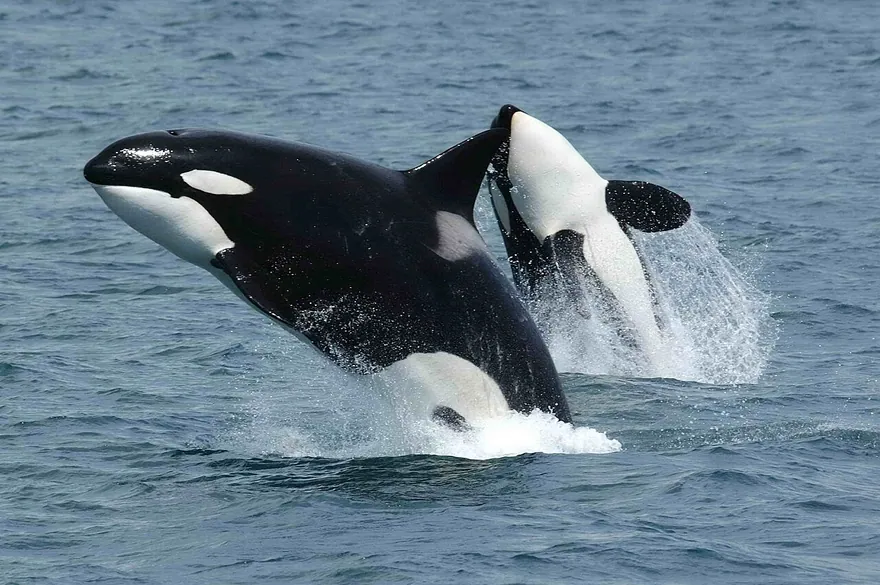
The orca is the biggest dolphin in the ocean, wearing a striking black-and-white suit with eye-catching white patches. These powerful swimmers roam seas from icy polar waters to warm tropical coasts, though they prefer cooler areas. Scientists think there might be several different kinds of orcas hiding in those sleek bodies.
- They are the largest members of the dolphin family.
- Their bold black-and-white pattern makes them instantly recognizable.
- They live everywhere from the Arctic to the tropics.
Classification and size
The orca (Orcinus orca), also called the killer whale, is the largest member of the dolphin family Delphinidae. An adult male can be recognised by its tall dorsal fin, which is generally much taller than that of an adult female. NOAA Fisheries gives a maximum length of about 32 feet, close to 10 metres. Look for the white patch behind the eye and the grey area behind the dorsal fin. That grey marking is called a saddle patch, and its shape helps researchers distinguish individuals in photographs.
Habitat and distribution
Orcas live in all the world’s oceans. They are often seen in colder and more productive waters, but some groups live in temperate or tropical seas. Their habitat can include enclosed coastal channels, shelf waters and the open ocean. The route a group takes can depend on the movement of its prey. Groups using the same coast can spend time in different places or use the same water in different seasons.
Diet and group life
Orcas are active predators, and their diet depends strongly on which group you are looking at. In the northeastern Pacific, resident killer whales feed primarily on fish, including salmon, while Bigg’s killer whales hunt marine mammals. Hunting tactics and calls can be learned within a group. That helps explain why animals that look similar in a photograph can feed in very different ways. Unlike a blue whale, which uses baleen to strain small prey, an orca has teeth and can pursue individual animals.
Conservation
The directory records the IUCN global category as Data Deficient. Some populations have separate legal protections. For example, NOAA lists the Southern Resident population as Endangered under the U.S. Endangered Species Act. For those whales, reduced prey, pollution and disturbance from vessels are documented concerns. Check the assessment for the particular population when discussing its risk.
Sources
At a glance
- Classification
- Mammal
- Scientific name
- Orcinus orca
- Habitat
- Ocean, Polar
- Regions in this directory
- Arctic, Antarctica, Worldwide
- Diet
- carnivore
- Relative size
- giant
- IUCN Red List
- Data Deficient (DD)