Whale shark
Rhincodon typus
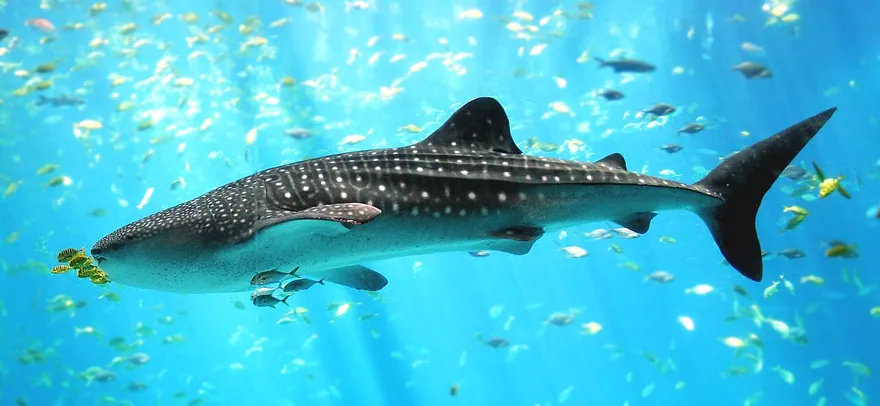 Endangered
Photo: User:Zac Wolf (original), en:User:Stefan (cropping) · CC BY-SA 2.5
The whale shark is the biggest fish in the ocean, gliding through warm waters with its wide, filter-feeding mouth. Despite its enormous size—some stretch over 18 meters long—it’s harmless to humans, dining mostly on tiny plankton and small fish. It’s the sole member of its family, Rhincodontidae, making it a true one-of-a-kind giant.
- The largest recorded whale shark measured 18.8 meters (61.7 feet).
- It’s a filter-feeder, straining plankton and small fish from the water.
- The only living species in its family, Rhincodontidae.
Classification and size
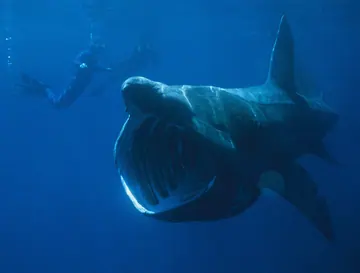
The whale shark (Rhincodon typus) is the largest living fish and the only living species in its family, Rhincodontidae. It is a shark with a skeleton made largely of cartilage. A broad head, a wide mouth and a pattern of light spots and stripes make it recognisable. Researchers can compare photographs of the markings behind the gills to identify individual sharks. Large adults can grow to more than 10 metres long. Many whale sharks seen at well-known coastal gathering sites are smaller juveniles.
Habitat and distribution
Whale sharks occur in tropical and warm-temperate seas. They use both coastal waters and the open ocean, sometimes crossing large distances between sightings. At some sites sharks gather when currents or spawning events concentrate food near the surface. Those gatherings are seasonal and reveal only one part of the animal’s range. A shark can also dive well below the surface and spend time in places where divers and boat crews rarely see it.
Diet and feeding
Whale sharks feed on small animals such as plankton and tiny fish. They can swim forward with the mouth open or draw water in by suction. Food is retained by filtering structures as water leaves through the gill openings. A shark feeding on a dense patch near the surface may point its head upward. Its size and name invite comparison with a blue whale, which strains food with baleen and must surface to breathe. The whale shark takes oxygen from water through its gills.
Conservation
The IUCN lists the whale shark as Endangered. Fishing, accidental catch and collisions with vessels can all threaten the species. Gathering sites help researchers study individuals over time. They also make it important for boats and swimmers to follow local rules so feeding sharks have room to move.
Sources
At a glance
- Classification
- Fish
- Scientific name
- Rhincodon typus
- Habitat
- Ocean
- Regions in this directory
- Worldwide
- Diet
- filter-feeder
- Relative size
- giant
- IUCN Red List
- Endangered (EN)