Arctic fox
Vulpes lagopus
 Common
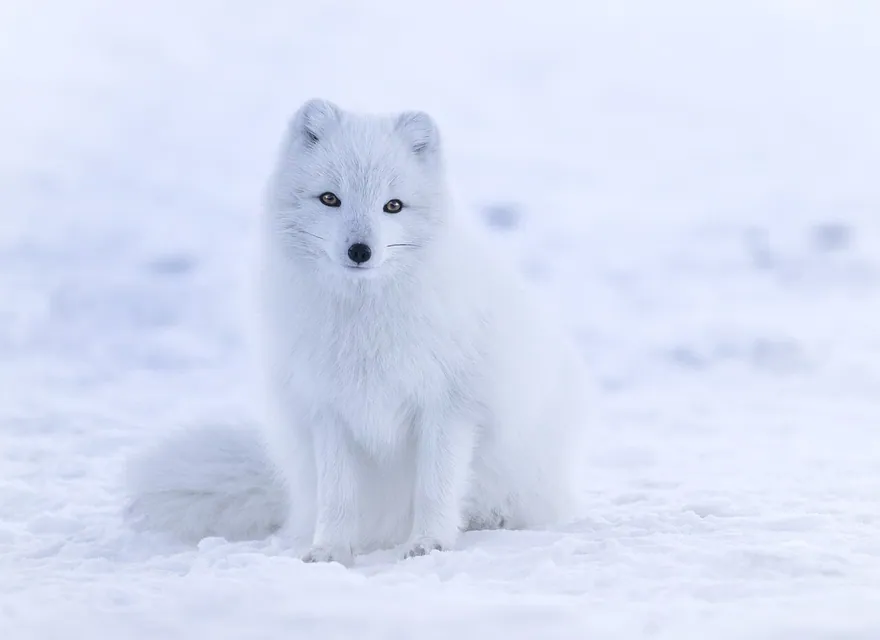
The Arctic fox is a small fox that thrives in the chilly Arctic tundra. Its thick fur keeps it warm and helps it blend into snowy landscapes. Known for its fluffy tail, this fox is built to survive in freezing conditions.
- Its fur changes color to match snow in winter.
- It grows up to 68 cm long, with a rounded body to conserve heat.
- Some Arctic foxes live up to 11 years in the wild.
Classification and size
The Arctic fox (Vulpes lagopus) is a small member of the dog family. It has a short muzzle, rounded ears and a thick tail, which together give it a compact shape. The Alaska Department of Fish and Game describes adults that typically weigh about six to ten pounds, or about three to five kilograms. Fur covers the feet. Many Arctic foxes turn from brown or grey in summer to white in winter, while the darker colour form keeps a darker winter coat.
Habitat and distribution
The species lives around the far north, including Alaska, Canada, Greenland, Iceland, Scandinavia and Russia. Arctic foxes use tundra, coastal ground and islands. Some also travel on sea ice. An animal on a rocky coast can find a very different supply of food from one living inland. Den sites can be used for many years, and in some areas a long-used den is easier to see than an individual fox.
Diet and behaviour
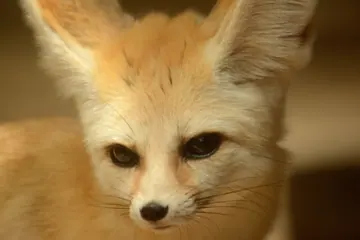
In many inland areas Arctic foxes hunt lemmings and other small mammals. Near the coast they can take seabirds, eggs and food washed ashore. They also scavenge and store food for later. The mix changes with the season and the local prey population. A fox that follows a polar bear on the ice may find remains from a seal kill. Compare the fox with a fennec and look at the size of the ears: both are foxes, but their bodies exchange heat with very different environments.
Conservation
The IUCN lists the species as Least Concern globally. Particular populations have different trends and threats. In some areas the larger red fox competes with Arctic foxes for food and den sites. A global category can therefore coexist with targeted protection in a region where Arctic foxes are scarce.
Sources
At a glance
- Classification
- Mammal
- Scientific name
- Vulpes lagopus
- Habitat
- Tundra, Polar
- Regions in this directory
- Arctic
- Diet
- omnivore
- Relative size
- small
- IUCN Red List
- Least Concern (LC)